
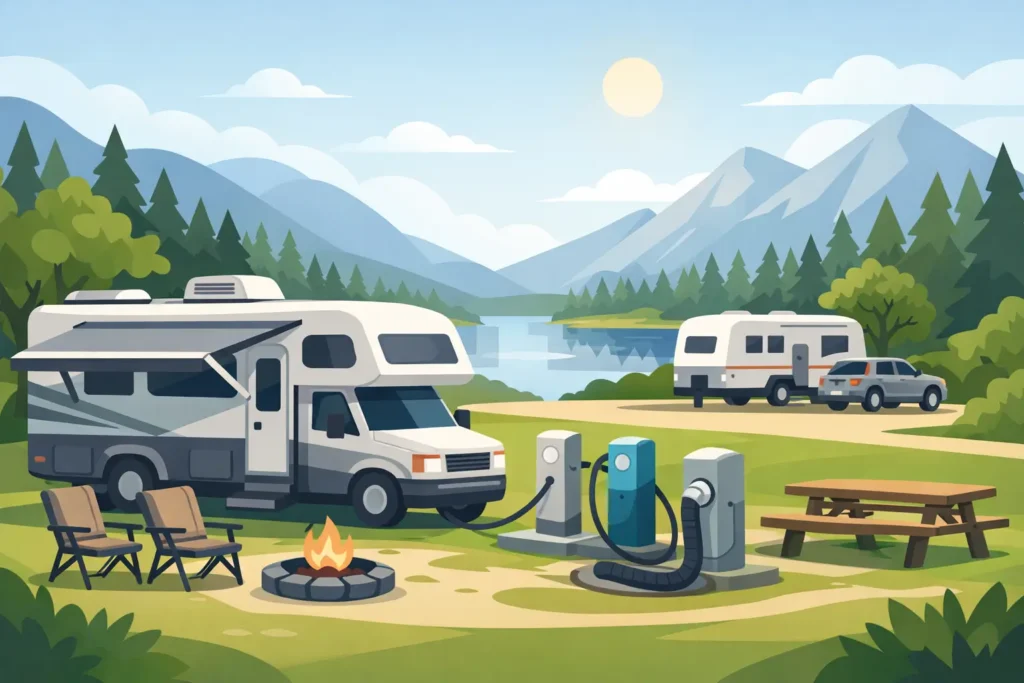
Pulling into a campground after a long drive is a lot different when your site is ready for water, sewer, and electric right away. That is the real value of full hookup RV campgrounds. For weekend travelers, seasonal campers, and families who want more time outside and less time managing setup, full hookups make the stay simpler, cleaner, and a lot more comfortable.
Some RV owners treat full hookups as a nice extra. Others will not book a site without them. Both approaches are fair, and it really comes down to how you camp, how long you stay, and what kind of trip you want. If your plans include boating at sunrise, fishing until dark, riding nearby trails, or settling in for a full season, the right campground setup matters more than fancy marketing ever will.
What full hookup RV campgrounds actually include
At the basic level, full hookup RV campgrounds provide three core connections at your site: water, electric, and sewer. That means you can run your RV systems the way they were designed to work without relying as heavily on holding tanks, public bathhouses, or short-term workarounds.
Water hookup gives you a direct fresh water supply for sinks, showers, and toilets. Electric service powers your air conditioning, heat, lights, appliances, and battery charging, though the exact amperage matters and should always be confirmed before you arrive. Sewer hookup lets you connect your waste system directly at the site, which is one of the biggest quality-of-stay upgrades for longer visits.
That combination changes the day-to-day experience. Instead of watching tank levels, planning dump station runs, or cutting showers short, you can camp with a lot more freedom. For families, that means less hassle. For seasonal guests, it means a site that feels dependable from one visit to the next.
Why full hookups matter more on active trips
If your trip is built around staying busy outdoors, convenience at camp becomes a bigger deal. A site with full hookups supports the kind of stay where you can get back from the water, clean up properly, recharge gear, cook dinner, and head out again the next morning without wasting time on campground logistics.
That is especially true for people who travel with boats, fishing equipment, ATV gear, or a full family setup. Wet clothes, extra cooking, more showers, and more power use all add up fast. A no-frills site may work for a night or two, but on a longer recreational stay, full service tends to be worth it.
For many campers, the real benefit is consistency. You know what your setup will be. You know your RV systems can run normally. You know the trip is focused on the reasons you came there in the first place, whether that is fishing, boating, family time, or using a campground as a reliable basecamp for the season.
Who full hookup RV campgrounds are best for
They are a strong fit for almost any RV traveler, but some campers get more value from them than others. Families with kids usually appreciate the convenience right away because water and sewer use is simply higher. Weekend travelers like them because they reduce setup stress and make short stays feel easier. Seasonal campers often see them as essential because the comfort difference becomes obvious over time.
They also make sense for travelers who want to stay close to outdoor recreation without giving up practical comfort. If you are spending full days on the water or planning repeated trips through spring, summer, and fall, a full hookup site supports that lifestyle better than a basic overnight stop.
That said, not every traveler needs one every time. If you are in a self-contained rig for a quick stop and do not plan to use many onboard systems, partial hookups can be enough. But when the stay is longer, more active, or more family-oriented, full hookups usually earn their keep.
How to compare full hookup RV campgrounds
Not all full hookup sites deliver the same experience. Two campgrounds may both advertise full hookups, but the quality of the stay can be very different once you look past the label.
Start with the site itself. Space matters. A campground can have hookups and still feel tight, hard to maneuver, or poorly laid out for larger rigs and tow vehicles. If you travel with a boat, side-by-side, or extra gear, you need room that works in real life, not just on a reservation screen.
Then look at how the campground fits your plans. If your goal is fishing, boating, hunting access, ATV riding, or a seasonal setup near the water, the hookups are only one part of the decision. The bigger question is whether the property supports the way you actually spend your time. A full hookup site beside meaningful outdoor access is a lot more valuable than a polished park with nothing to do once you park.
You should also check the utility details. Electric service may be 30 amp, 50 amp, or both. Sewer connections may be straightforward at one park and awkward at another depending on site grade and layout. Water pressure, road access, shade, and seasonal availability all affect the stay, especially if you plan to return often.
Full hookup RV campgrounds and seasonal camping
For seasonal campers, full hookups are less of a luxury and more of a baseline. When your RV becomes your regular warm-weather base, you want a site that supports normal routines. That means reliable utility access, a layout that works for extended use, and a property that gives you reasons to keep coming back.
Seasonal camping works best when the campground offers more than a parking spot. Access to the water, room to settle in, and nearby recreation all matter. So does the overall feel of the place. Serious outdoor people usually prefer a campground that understands real use – boats in and out, anglers cleaning up after a day on the water, families managing active weekends, and guests who want practical comfort without resort fluff.
This is where location becomes part of the value. A waterfront campground with full-service RV sites and direct access to boating and fishing can do a lot more for a seasonal guest than a standard inland park with hookups alone. At a property like Maitland Shores, the combination is the point: full hookups, room to stay, and immediate access to the kind of outdoor recreation that fills up a whole season.
What to ask before you book
Before reserving a site, it helps to ask a few direct questions. Confirm the electric service your rig needs and whether the site can handle it. Ask about site size and maneuvering room, especially if you have a larger RV, a trailer, or extra equipment. If you are planning a longer stay, ask how the campground handles seasonal occupancy, opening dates, and site availability during peak periods.
It is also smart to ask what is nearby or on the property. Full hookups are valuable, but they are most useful when paired with the kind of stay you want. If boating, fishing, trail access, or waterfront time are part of the trip, make sure the campground is set up for that, not just technically offering campsites.
The right questions save frustration later. They also help you find a place that fits your style of camping instead of forcing your trip into someone else’s idea of what RV travel should look like.
Choosing comfort without losing the outdoor experience
Some travelers worry that full hookup camping feels less like camping. That depends entirely on the property and the people using it. Hookups do not take away the early mornings, the dock at first light, the campfire at night, or the routine of coming back muddy, tired, and ready for a good meal.
What they do is remove a layer of inconvenience. You still get the outdoors. You just get a better reset at the end of the day. For many RV owners, that makes it easier to camp more often, stay longer, and bring the whole family along without turning every trip into a test of patience.
If your ideal trip includes serious recreation, repeat visits, or a seasonal site you can count on, full hookups are not just about comfort. They are part of making the experience workable. The best campground is the one that lets you spend less effort managing your site and more time out on the water, on the trail, or around the fire.