
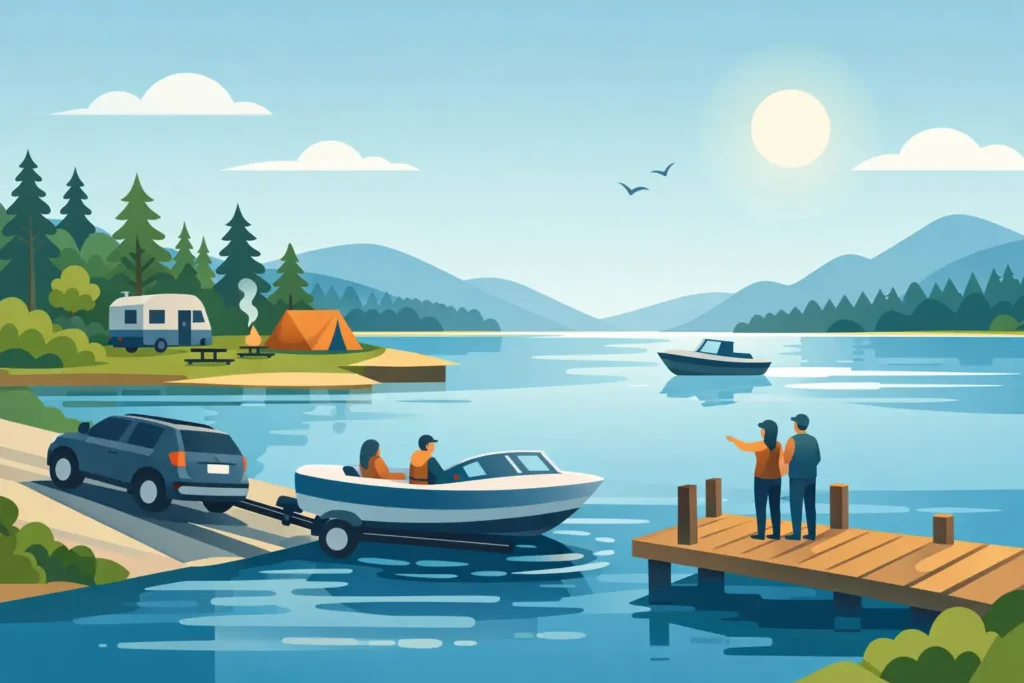
A boat launch can make or break a camping trip. If you are towing a fishing boat, a pontoon, or a small runabout, the difference between a smooth morning on the water and a frustrating start often comes down to one thing – choosing the right campground with boat launch access.
For boaters, anglers, and RV campers, that choice is not just about proximity to water. It is about how easily you can launch, how quickly you can get back out, where you can park, what kind of water access you actually have, and whether the campground is built for the kind of outdoor use you have planned. A place can look great in photos and still be a poor fit if the launch is too shallow, the roadway is tight, or the campground is better suited to casual tent camping than serious boating.
What a campground with boat launch should actually offer
The first thing to look at is whether the launch is a real part of the property or more of an afterthought. Some campgrounds advertise water access when what they really mean is a nearby public ramp a few miles away. That may work for some travelers, but if you are staying for a long weekend or setting up for a seasonal stay, on-site access changes the experience.
An on-property launch saves time, reduces towing hassle, and makes it easier to use your boat more than once a day. You are far more likely to head out for an early fishing run or a short sunset cruise if launching does not feel like a separate trip.
Just as important is the type of water the launch connects to. A protected river channel, marina basin, or inland bay can be easier for families and smaller boats. Direct access to larger open water can be a major advantage for experienced boaters, but it also means weather matters more. The best setup often depends on how you use your boat and how comfortable you are handling changing conditions.
Why launch quality matters more than most campers expect
A boat launch is not just a slab of concrete near the shoreline. Its design affects safety, wait times, equipment wear, and how stressful your trip feels.
A good launch has enough slope to get boats in and out efficiently without creating traction problems. It also needs enough depth at the end of the ramp for the boat you are towing. If water levels fluctuate, that becomes even more important. What works fine for a small aluminum fishing boat may not work nearly as well for a heavier fiberglass rig.
Road access to the launch matters too. Tight turns, soft shoulders, or crowded internal roads can become a problem when you are backing down a trailer. If you are traveling with a larger RV and towing a boat, space is not a luxury. It is part of whether the campground works at all.
Parking is another detail that gets overlooked until you arrive. A campground with boat launch access should have a clear plan for tow vehicle and trailer parking, especially during busy weekends. If parking is improvised or limited, it can quickly turn into congestion at the ramp and friction between guests.
The best setup for RV campers and seasonal guests
If boating is a big part of your trip, it helps when the campground is set up for more than overnight convenience. Full-hookup RV sites, practical site layouts, and room to move equipment around the property all matter.
For weekend guests, the main question is ease. Can you arrive, get parked, launch without a long delay, and settle in without feeling rushed? For seasonal campers, the focus shifts a little. You want reliable access over time, enough infrastructure to support repeat trips, and a property that makes it easy to balance boating with everything else you came to do.
That is where a larger waterfront property stands out. A campground built around outdoor recreation tends to function better for boaters than one that simply happens to sit near water. When boating, fishing, and marina use are already part of the campground culture, the amenities usually reflect that. You see it in launch design, shoreline access, site planning, and the overall pace of the place.
Campground with boat launch access for fishing trips
For anglers, the launch is only one part of the equation. The bigger question is how quickly you can get from camp to productive water.
A campground with boat launch access near strong fishing water gives you more flexibility throughout the day. You can get out before sunrise, come back in for lunch, re-rig if conditions change, and head back out in the evening. That kind of access is a real advantage compared with staying inland and trailering back and forth from a separate public launch.
It also helps if the property supports the rest of a fishing trip in practical ways. That means enough room at your site, easy vehicle movement, and a setting where early starts are normal rather than disruptive. Serious anglers do not need polished extras as much as they need a campground that understands how fishing trips actually work.
If your trip includes both river and open-lake opportunities, the value goes up even more. Access to connected waterways can give boaters and anglers options depending on weather, season, and target species. That flexibility often separates a decent destination from one people return to year after year.
What families should look for
Families often want a boat launch for convenience, but they also need a campground that works when the boat is not in the water. That means comfortable campsites, easy access to amenities, and enough on-site recreation to keep everyone engaged.
If you are traveling with kids, protected water access may be more useful than dramatic open shoreline. If you are mixing boating with tent camping, cabin stays, or RV camping, the best campground is usually one that can support different comfort levels without making the trip feel complicated.
This is where a recreation-focused property has an edge. When the campground is built to support boating, fishing, and other outdoor activities in one place, families can spend less time driving between destinations and more time actually enjoying the stay. That matters on short trips when every hour counts.
Questions worth asking before you book
Before reserving a site, it helps to ask a few direct questions. Is the boat launch on site? Is it suitable for your boat size? Is there dedicated trailer parking? How close are campsites to the launch or marina area? Are there any seasonal water-level issues or launch restrictions?
It is also smart to ask how the property handles busy weekends. Some campgrounds look easy to use during the week but get crowded fast during peak summer periods. If you are planning around fishing windows, holiday weekends, or family schedules, that detail matters.
The right campground should be able to answer these questions clearly. If the answers are vague, that usually tells you something.
Why the surrounding property matters
The launch itself is important, but so is everything around it. A larger property with room for RV sites, seasonal stays, waterfront access, and additional recreation tends to create a better experience overall.
That is especially true for guests who want more than one activity in a trip. You may come for boating but also want fishing, trail riding, hunting access, or simply a comfortable waterfront base. A campground that can support those plans without sending you off-property for every activity is far more useful than a basic site with a ramp.
At a place like Maitland Shores, that combination is exactly the point. Waterfront camping works better when the launch, marina access, RV sites, and outdoor recreation all fit together on one property. It is a more practical setup for weekend boaters, fishing groups, and seasonal campers who want a dependable base instead of a one-time stop.
When a campground with boat launch is worth the extra planning
Not every trip needs this kind of setup. If you are only camping for one night or you rarely use your boat, a standard campground near a public ramp might be enough. But if boating is central to the trip, direct launch access usually earns its keep quickly.
You save time. You reduce hassle. You make it easier to get on the water when conditions are right instead of missing the best part of the day because launching became a project.
That is really what people are looking for when they search for a campground with boat launch access. Not just a place to sleep near the shoreline, but a place that makes the whole trip work better. If the property is built for real outdoor use, you can feel the difference as soon as you pull in.
A good campground should make it easier to spend your time where you want it – on the water, around the fire, and back at a site that is ready for another day outdoors.