
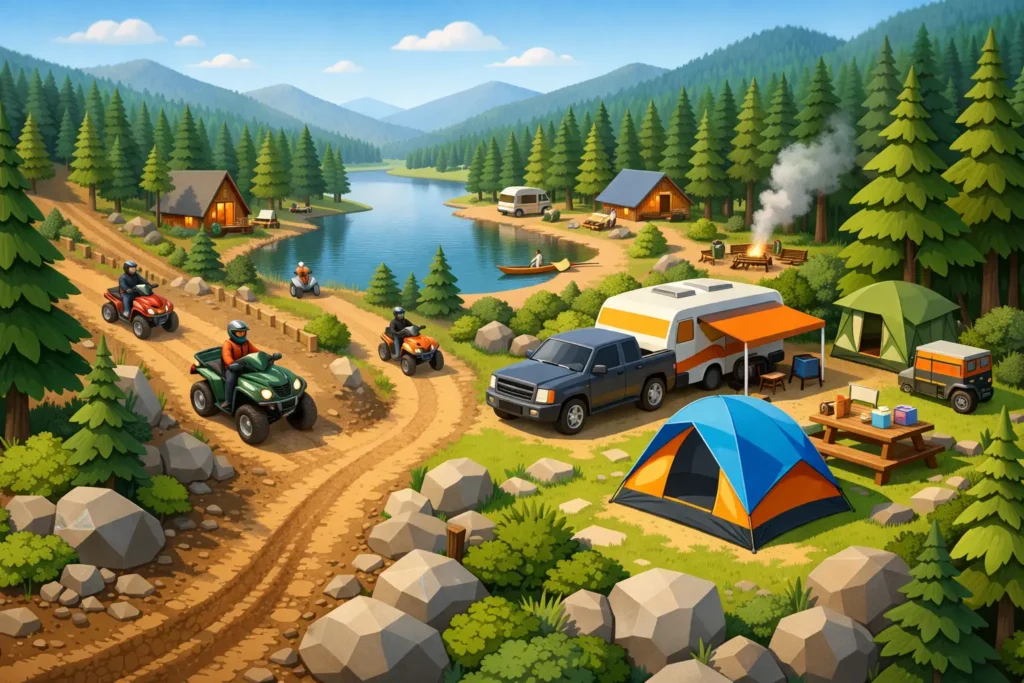
The difference between a good riding trip and a frustrating one usually comes down to where you camp. If you book a campground near ATV trails but still have to trailer long distances, deal with tight site layouts, or give up basic comforts after a full day on the machine, the location is only doing half the job.
For riders, the right campground needs to work before the engine starts and after the ride ends. You want easy trail access, enough room for your RV or trailer, practical hookups, and a setup that makes it simple to come back dirty, tired, and ready to relax. Families want that too, with the added need for a place that still feels comfortable for non-riders.
What makes a campground near ATV trails worth booking
A lot of campgrounds advertise nearby riding, but “nearby” can mean very different things. Sometimes it means a true ride-in, ride-out setup where you can access trails directly from camp. Other times it means loading up, driving to a trailhead, unloading, and repeating that process at the end of the day.
That difference matters more than most people think. If your trip is built around riding, direct or very easy access saves time and cuts down on hassle. It also makes it easier to split the day. You can head out for a morning run, come back for lunch, and get back on the trail without turning every ride into a full logistics exercise.
A strong ATV-friendly campground also understands what riders actually need on-site. That usually means wider roads, room to maneuver trailers, dependable utility service, and enough space to park gear without feeling crowded. If a property is designed only for quiet tent camping and light weekend use, it may not be the best fit for a machine-focused stay.
Start with trail access, not just trail distance
When riders search for a campground near ATV trails, the first instinct is to check how many miles separate the campground from the nearest route. Distance matters, but access matters more.
A campground that sits close to a trail system but requires complicated road travel may not be as convenient as one that is slightly farther out but much easier to use. You should look at how riders get from camp to trail, whether local roads allow ATV travel where applicable, and how much loading and unloading is actually involved.
This is also where terrain comes into play. Some riders want long wooded routes and a more remote backcountry feel. Others want varied riding with a mix of open stretches, mud, packed ground, and scenic areas. Families with younger or less experienced riders may prioritize easier access to manageable terrain over aggressive all-day routes.
The best choice depends on how you ride. If your group wants maximum seat time, convenience should carry real weight in the decision.
The campground itself should support your trip
A trail can be excellent, but if the campground setup is poor, your stay still suffers. ATV trips are gear-heavy by nature. Between machines, helmets, fuel planning, tools, coolers, and the RV or trailer itself, you need a campground that can handle more than a basic overnight footprint.
Look closely at site size and layout. Back-in sites can work fine, but only if there is enough room to maneuver and store what you brought. Pull-through sites are often easier for larger rigs and riders towing equipment trailers. Full-hookup RV sites make a big difference too, especially on longer stays when power, water, and sewer stop being nice extras and start feeling essential.
If your group mixes riders and non-riders, campground amenities matter even more. Waterfront access, fishing, boating, open space, and family-friendly areas give everyone something to do when the machines are parked. That kind of variety can turn a riding trip into a better overall getaway instead of a narrow single-purpose weekend.
Why comfort matters after the ride
There is a tendency to treat ATV trips as rough-it-out weekends, but comfort has real value, especially if you plan to come back again and again. After hours on the trail, riders want a hot shower, a solid meal, a comfortable site, and a place to unwind without extra effort.
That is where the campground experience separates average properties from destinations people return to each season. Full hookups, reliable site infrastructure, clean grounds, and straightforward access all make recovery easier. If you are traveling with kids or a mixed-age group, cabin rentals, glamping options, or tent camping choices can also help different travelers stay the way they prefer without splitting up the trip.
A serious rider may focus on the trail map first, but a dependable campground earns the repeat booking.
A campground near ATV trails should also fit the season
Not every rider is booking the same trip. Some are looking for a quick summer weekend. Others want a basecamp they can rely on from spring through fall. Seasonal campers often think differently than short-term guests because consistency matters just as much as access.
If you plan to ride regularly, the right campground should feel practical over time. That means dependable reservations, a site you can settle into, easy arrival and departure, and enough nearby recreation to keep the property useful even on days when you are not riding. Fishing, boating, marina access, hunting opportunities, and waterfront downtime all add value because they give your stay more range.
That mix matters in places where the outdoor season is long and varied. A campground that supports multiple recreation styles gives you more reason to keep returning, even if every trip is not built around the exact same activity.
Questions to ask before you book a campground near ATV trails
You do not need a long checklist, but you do need clear answers. Ask whether trail access is direct or requires trailering. Confirm site sizes and whether larger RVs and utility trailers fit comfortably. Check what hookups are available and whether the property is better suited to overnight guests, weekend stays, or seasonal camping.
It is also smart to ask how the campground handles active recreation in general. Some properties say they welcome riders, but their layout or rules suggest otherwise. Others are built with outdoor recreation in mind, and that usually shows in how easy the stay feels from the minute you arrive.
If waterfront recreation is part of your trip too, ask about marina access, boat launch availability, and how the property balances land and water use. For many guests, that combination is exactly what makes the stay more worthwhile.
Why one well-rounded property often beats piecing a trip together
Some travelers try to build the perfect ATV vacation by booking a campground in one place, boating somewhere else, and finding fishing access off-site. That can work, but it usually creates more driving, more packing, and less time actually enjoying the trip.
A campground that combines ATV trail access with RV infrastructure, waterfront recreation, and room to stay comfortably simplifies everything. Instead of planning every hour around movement between locations, you can settle in and use the property as a real base. That is especially valuable for families and groups where not everyone wants the same schedule.
At a property like Maitland Shores, that kind of setup is part of the appeal. Riders can prioritize trail time while others enjoy the waterfront, marina access, fishing, or a quieter pace back at camp. It makes the stay more flexible without losing the practical benefits serious outdoor travelers care about.
The best choice comes down to how you actually camp
Some riders want the simplest possible setup – a place to park, sleep, and get back on the trail early. Others want a full campground experience with hookups, space, water access, and enough amenities to make the trip comfortable for everyone coming along.
Neither approach is wrong. The key is booking a campground that matches the way you use your time, your equipment, and your downtime. A campground near ATV trails should do more than put you on the map close to riding. It should make the whole trip easier, more comfortable, and more enjoyable from arrival to the last ride out.
If you are planning your next ATV getaway, look for a place that gives you room to ride and a reason to stay a little longer.