
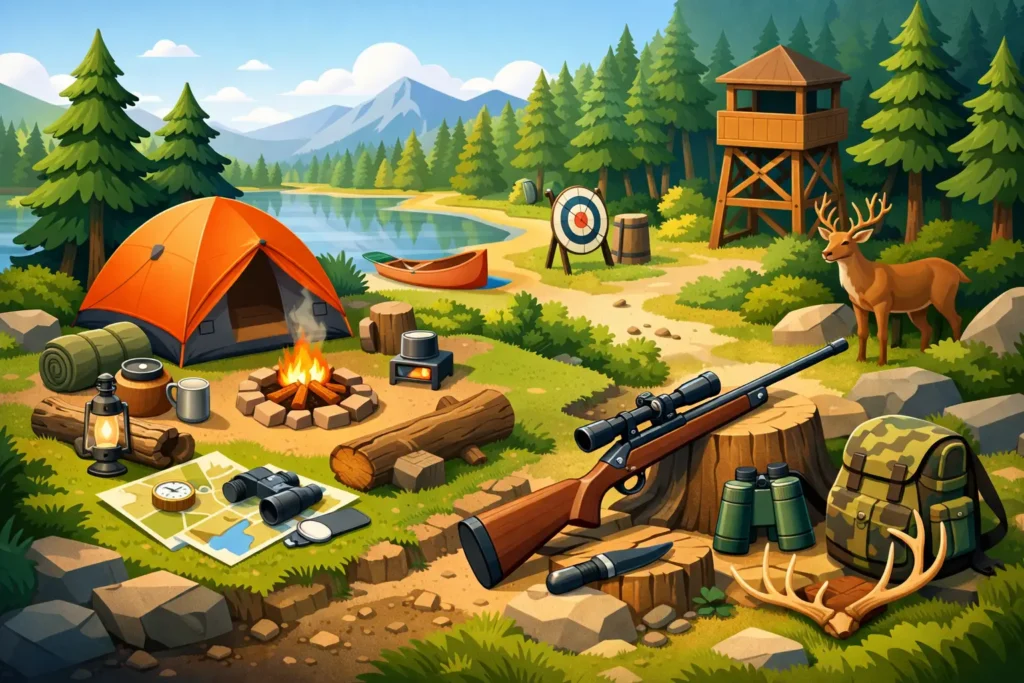
The difference between a good weekend and a frustrating one usually comes down to basecamp. On camping and hunting trips, you are not just looking for a place to sleep. You need a site that helps you move easily between early starts, muddy boots, gear storage, meals, rest, and the kind of comfort that lets you head back out again the next day.
That is why these trips work best when camping and hunting are planned together instead of treated like separate parts of the weekend. If your campground is too far from the hunting area, too limited for gear-heavy stays, or too basic for a multi-day trip, the whole experience gets harder than it needs to be. A strong setup gives you more time outdoors and less time dealing with logistics.
What makes camping and hunting trips worth planning well
A lot of outdoor travelers already know how to camp and how to hunt. What gets overlooked is how different the trip feels when those two activities are built around the same property or same general area. Convenience matters more than people think.
If you have direct access to open land, water, trails, and a dependable campsite, the trip becomes more efficient from the start. You can settle in once, organize equipment properly, and spend your time on the parts you actually came for. That matters for solo hunters, couples, groups of friends, and families who want a campground experience with more going on than sitting around a fire ring.
There is also a comfort factor that serious outdoor travelers appreciate. After a cold morning or a long day covering ground, it helps to return to a site with room to reset. Full-hookup RV camping, cabin stays, or even a well-placed tent site can change the pace of the trip in a good way. You still get the outdoor experience, but without turning every basic task into extra work.
Choosing the right base for camping and hunting trips
Not every campground fits this kind of stay. If hunting is one of the main reasons for the trip, your base should support that from a practical standpoint.
Start with access. A good location cuts down on drive time and puts you close to the land or water you plan to use. For many travelers, that also means looking for a property that supports more than one outdoor activity. If the hunting windows are short or conditions change, being near fishing water, boating access, or ATV trails gives the trip more value.
Amenities matter too, but not in a flashy way. What you want is space, convenience, and reliability. Full hookups help on longer stays. Clean facilities matter when your days start early and end late. Easy parking, room for trailers, and straightforward site layouts make setup faster and less stressful. If you are bringing family members who may not be part of every hunt, a campground with multiple recreation options makes the trip work better for everyone.
This is where a recreation-focused property stands out from a standard campground. A place like Maitland Shores works well because it combines RV sites, seasonal camping, cabins, marina access, and room for active outdoor use on one waterfront property. That kind of setup gives guests flexibility without losing the practical side of the trip.
Gear planning starts with the campsite
Most people think about hunting gear first, but campsite planning should come right alongside it. The more organized your site is, the smoother the trip goes.
Think through what you need at camp before and after time in the field. You need a dry place for clothing, boots, and packs. You need a reliable cooking setup. You need enough room to keep your equipment organized so mornings are quick and evenings do not turn into a gear search in the dark. If you are in an RV, that may mean using exterior storage strategically and keeping wet items separate from sleeping areas. If you are tent camping, it means having a shelter plan for weather and a clear system for keeping essentials dry and easy to reach.
Power can also make a difference, especially on longer stays. Charging devices, running basic appliances, and keeping lighting simple all help when the weather turns or the schedule gets tight. Hunters who have done this both ways know the trade-off. Roughing it has its place, but for repeat trips and multi-day stays, comfort and efficiency usually win.
Timing, weather, and realistic trip planning
A good plan leaves room for changing conditions. Weather, ground conditions, and seasonal patterns all affect how these trips unfold.
That is why it helps to choose a destination where the campground itself still holds value even if the hunt shifts. If conditions are not ideal one day, you still have a strong outdoor stay built around waterfront access, fishing, boating, trail riding, or time with family at camp. The trip does not feel wasted because the location supports more than one reason to be there.
It also pays to be honest about your group. Some camping and hunting trips are built for serious early-morning schedules and long days outside. Others need a more flexible pace, especially when mixed with family travel. There is no single right way to do it. The best setup depends on whether your trip is focused on hunting first, camping first, or a balanced mix of both.
Comfort is not a luxury on active outdoor trips
There is a point where better accommodations stop being an extra and start being part of the plan. If you are staying multiple nights, bringing a lot of gear, or traveling with a group, comfort supports performance.
That can mean different things for different guests. For RV travelers, full hookups and roomy sites make it easier to stay organized and rested. For families or guests who want outdoor access without sleeping in a tent, cabins or glamping options can make the trip much more workable. For traditional campers, a clean, well-managed tent site with nearby amenities may be all that is needed.
The key is matching the stay to the trip. If you are pushing for long days outdoors, recovering well at camp matters. Better sleep, easier meals, and less setup hassle mean more energy and patience the next day. That is not soft camping. That is smart trip planning.
A better fit for groups, families, and repeat stays
One reason these trips keep growing in popularity is that they work for more than one kind of traveler. Some guests are planning a serious outdoor weekend with hunting at the center of it. Others want a campground that gives everyone options, so one person can head out early while others enjoy the water, trails, or a slower morning at the site.
That flexibility matters if you want a destination you can return to throughout the season. A property with seasonal sites, marina access, room to spread out, and multiple recreation options becomes more than a one-off stop. It becomes a reliable base for repeat outdoor weekends.
That is especially appealing in the Great Lakes travel market, where people are often looking for one place that can handle several styles of recreation without a lot of extra driving. If you can camp, fish, boat, ride, and plan hunting time from the same general base, the value is obvious.
Getting more out of the trip without overcomplicating it
The best camping and hunting trips are usually not the ones packed with the most gear or the tightest schedule. They are the ones built around a location that makes outdoor time easier.
A dependable campground with real recreation access gives you options. It reduces setup friction. It helps you stay longer if the weather is good and still enjoy the trip if conditions change. It also makes the experience more welcoming for the people traveling with you, whether they are experienced outdoorsmen, casual campers, or family members who just want comfort and something to do near camp.
When the basecamp is right, the whole trip feels more natural. You wake up closer to what you came for, return to a site that works, and spend less energy managing the stay itself. That is what keeps people coming back season after season.
If you are planning your next outdoor getaway, think beyond where you will hunt and look just as hard at where you will stay. The right campsite does more than support the trip. It can be the reason the trip works so well in the first place.