
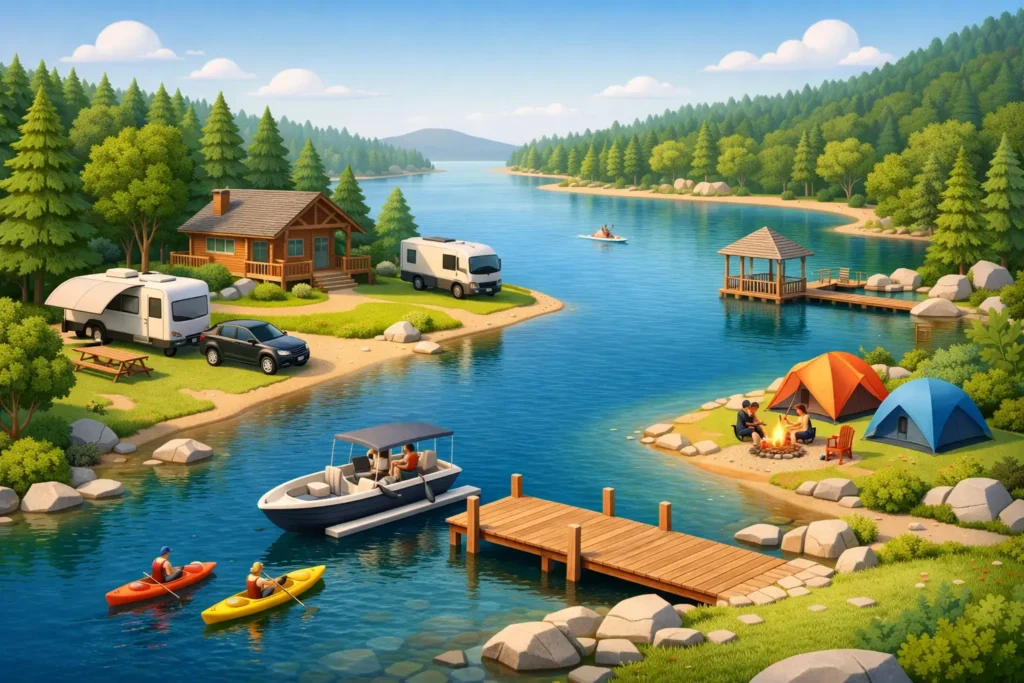
Not all waterfront camping is the same. A private waterfront campground gives you something public parks and crowded shoreline campgrounds often can’t – direct access, more room to settle in, and a better shot at spending your time on the water instead of waiting around for it.
For RV travelers, anglers, boaters, and families who actually plan to use the outdoors from morning to dark, that difference matters. If your idea of a good trip includes launching a boat, fishing before breakfast, riding nearby trails, or keeping the kids busy without packing up the truck every few hours, the campground itself has to do more than provide a place to sleep.
What makes a private waterfront campground different
The biggest advantage is control over access. On a private waterfront campground, the shoreline, launch areas, site layout, and amenities are designed around guests staying on the property. That usually means less congestion, less uncertainty, and a more dependable camping experience.
Public waterfront areas can be great for day use, but they often come with limits that wear thin fast. Parking fills up. Boat launches back up. Prime shoreline space gets crowded. Quiet mornings can turn busy in a hurry, especially on weekends and holidays. If you are traveling with an RV, boat, ATV, or family gear, those small delays add up.
A private setting changes the pace. You can get from your campsite to the dock, launch, or water without turning every outing into a logistics project. That is a major benefit for seasonal campers and for weekend travelers trying to make the most of a short stay.
Why waterfront access matters more than the view
A lot of campgrounds advertise waterfront, but the real question is how usable that access is. There is a big difference between seeing the water and being able to fish it, launch into it, or keep your boat close by.
That is where a well-equipped private waterfront campground stands out. If the property is built for real recreation, waterfront access becomes part of your routine, not just part of the backdrop. You can head out early for fishing, come back for lunch, and get on the water again in the evening without driving off-site or fighting for space.
For boaters, marina access and a practical launch setup matter just as much as the shoreline itself. For anglers, water quality, access points, and proximity to productive areas matter more than a scenic photo. For families, easy access often means more time spent outside and less time managing the basics.
That is why serious outdoor travelers tend to look past generic resort language. They want to know whether the campground works for the way they camp.
A private waterfront campground works best when the amenities are practical
The best camping properties are not necessarily the flashiest. They are the ones that understand what people need after a long drive, an early launch, or a full day outdoors.
For RV campers, full hookups make a major difference, especially on longer stays. Reliable power, water, and sewer connections turn a quick trip into a comfortable basecamp. If you are planning a week on the water or a full season of weekends, comfort stops being a luxury and starts being part of the plan.
Cabins, tent sites, and glamping options also matter because not every group travels the same way. Some families want the flexibility of mixing accommodations. Some fishing groups want simple access and a place to clean up at the end of the day. Some travelers want a softer entry into camping without giving up waterfront access.
A strong private waterfront campground is built to handle those different needs without losing its focus. The point is not to be everything to everyone. The point is to support the kinds of stays people actually book – short getaways, seasonal camping, fishing weekends, and repeat visits built around the outdoors.
Who gets the most value from this kind of campground
If your trip revolves around activity, a private waterfront campground usually offers more value than a basic inland park or a crowded public site.
RV owners tend to benefit right away because setup is easier and the payoff is better. Instead of camping near the action, you are staying where it happens. That matters if you brought a boat, plan to fish more than once a day, or want enough room to make the site feel livable.
Seasonal campers get even more out of it. A site that gives you repeat access to boating, fishing, waterfront views, and nearby trail use becomes more than a reservation. It becomes a reliable outdoor base for the season. You know the setup, the route, the water, and the rhythm of the place. That familiarity is a big part of the appeal.
Families also do well in this kind of environment, especially if they want a trip that keeps everyone moving. Waterfront stays create built-in activities without the need to drive somewhere new every day. One person can fish, another can spend time on the boat, and the rest of the group can enjoy camp life without feeling stuck.
What to look for before you book
Not every private waterfront campground offers the same experience, so it is worth looking at the details before making a reservation.
Start with the property itself. Size matters. A larger waterfront property often means more breathing room, better separation between campsites and activity areas, and a wider range of site types. It can also support different uses at the same time without feeling packed.
Next, look at access. If boating and fishing are part of the trip, check whether there is a marina, boat launch, dock access, or a clear connection to larger water routes. If land-based recreation matters too, nearby ATV trail access, hunting opportunities, and open space can make the stay more worthwhile.
Then consider whether the infrastructure supports the length of stay you want. Weekend campers may be fine with the basics. Seasonal guests usually need more – dependable hookups, manageable site layouts, easy arrival and departure, and amenities that stay useful month after month.
Finally, pay attention to the overall style of the campground. Some waterfront properties lean heavily on quiet scenery. Others are built for active outdoor use. Neither is automatically better. It depends on what kind of trip you want. If you are bringing gear, planning multiple activities, and expecting to use the water every day, choose a place that is clearly designed for that pattern.
Why repeat campers often choose private waterfront stays
The first booking is usually about location. The second and third are about convenience.
When people find a private waterfront campground that fits the way they camp, they tend to return because it simplifies everything. They know where to launch. They know the fishing pattern. They know the site setup works for the RV, the kids, the boat, or the weekend schedule. That level of predictability is hard to overstate.
It is also why seasonal camping is such a strong fit for waterfront properties with real infrastructure. Instead of starting over each trip, you arrive with momentum. The season feels longer. The setup gets easier. You spend less time planning and more time actually using the property.
At a place like Maitland Shores, that appeal is tied to more than the shoreline alone. It is the combination of full-service RV camping, waterfront access, marina convenience, and room for serious outdoor recreation across a large private property. For travelers who want boating, fishing, ATV access, and a dependable place to stay, that mix makes sense in a way smaller or more generic campgrounds often do not.
The right fit depends on how you camp
A private waterfront campground is not just for people who want a better view. It is for people who want their campsite to work harder for the trip they have in mind.
If you are after quiet simplicity, a smaller rustic campground may be enough. If your plans include boating, fishing, seasonal RV stays, family weekends, or using both land and water during the same trip, private waterfront access becomes much more than a nice extra.
The best choice is the one that matches how you actually spend your time outdoors. If the water is central to your trip, it makes sense to stay where access is built in, the amenities are practical, and the property gives you room to keep coming back.