
Your first RV trip is easier when you arrive with the right equipment, a site that fits your rig and a realistic plan for setting up. This first-time RV camper checklist for Ontario focuses on the decisions and supplies that matter most, from confirming your electrical service to packing for a cool evening.
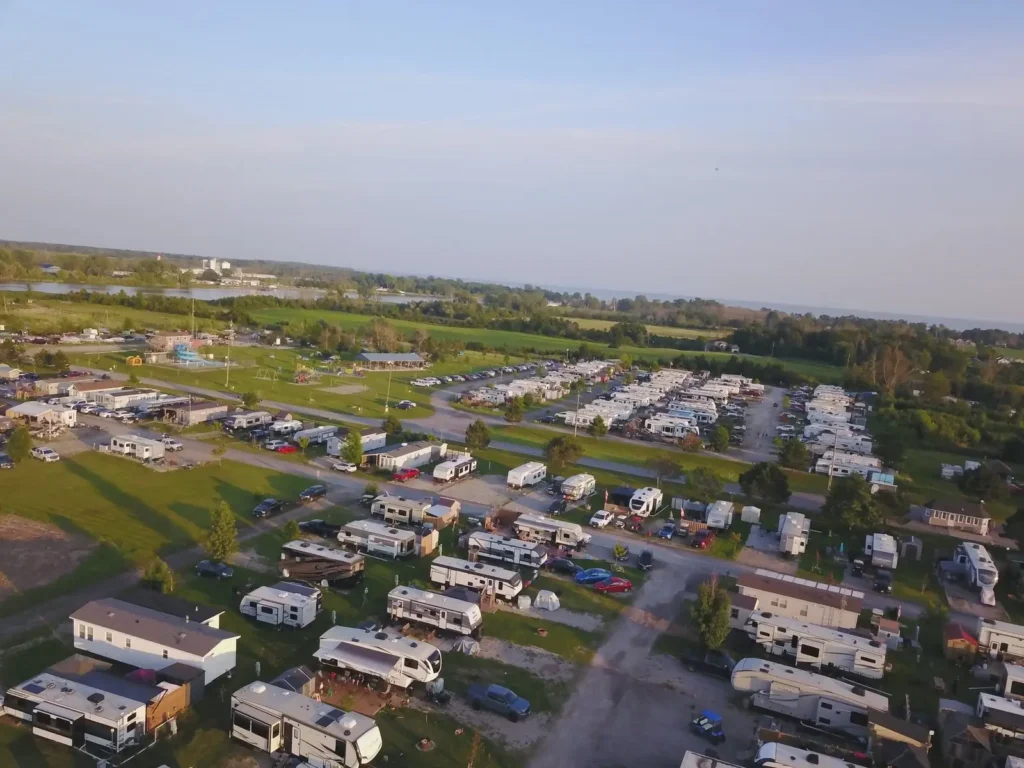
If you are planning a stay in Dunnville, Haldimand County, explore camping at Maitland Shores Resort, where the Grand River meets Lake Erie. Confirm your dates, RV dimensions and site requirements with the park before travelling.
1. Confirm the campsite before packing
Choosing a campsite is about more than finding an open date. Have your RV information ready when you book so staff can help you choose a suitable space.
- RV type and dimensions: provide your motorhome or trailer length, overall height and slide-out clearance. If towing, also give the total vehicle-and-trailer length and ask where the tow vehicle or towed car can park.
- Electrical requirements: tell the office whether your RV needs 30-amp or 50-amp service. Confirm the service available at your particular site.
- Site layout: ask whether the space is pull-through or back-in, and check parking arrangements for your tow vehicle.
- Party details: include adults, children and pets, and ask about visitor arrangements if friends plan to join you.
- Arrival arrangements: confirm check-in instructions and contact the office before travelling if you expect to arrive late.
Read the current park rules before booking. Ask about the booking terms, applicable charges and any activity-specific requirements rather than assuming every service is included.
2. Check your RV before leaving home
Use the inspection checklist supplied by your RV manufacturer or rental company. Arrange professional help for any mechanical, electrical or propane concern instead of trying an unfamiliar repair immediately before departure.
- Review tire condition and the manufacturer’s pressure recommendations.
- Check lights, mirrors, hitch equipment and any towing equipment required for your setup.
- Confirm insurance, registration, roadside assistance details and reservation information.
- Check Ontario’s current RV driving and licence guidance for your motorhome or towing combination, including any required endorsements.
- Check the operation of the RV’s safety equipment according to the manufacturer’s instructions.
- Secure loose items and confirm that doors, compartments, steps, slides and awnings are ready for travel.
- Check the loaded weight and towing limits, including water, passengers and luggage.
If this is your first time towing or manoeuvring a large RV, allow time for practice before the trip. A short first stay gives you a chance to learn your setup without combining it with a demanding travel itinerary.
3. Pack the hookup equipment your rig needs
A serviced campsite does not replace the equipment supplied with your RV. Check what you own, what your rental includes and what the selected site provides. Use our full-hookup site-fit checklist to prepare utility questions for the office.
- The RV’s approved power cord and electrical protection recommended for that vehicle.
- A drinking-water-safe hose, with separate equipment for wastewater handling.
- A suitable sewer hose and fittings if your chosen site has a sewer connection.
- Wheel chocks and levelling equipment appropriate for your RV.
- Gloves, a flashlight or headlamp, and a small kit of basic supplies.
- The operating manuals and instructions for your particular model.
Use equipment rated for the job and follow the RV and equipment manufacturers’ instructions. Ask staff about unfamiliar campsite connections; do not improvise electrical connections or assume an adapter changes the power available.
4. Keep everyday packing simple
Start with the items needed for meals, sleep, washing up and changing weather. You can refine the list after your first trip.
- Bedding, pillows and an extra warm layer for overnight temperature changes.
- Weather-appropriate clothing, rainwear and comfortable footwear.
- Simple meal ingredients, drinking water for the journey and food-storage containers.
- A few cooking utensils, dishes, dishwashing supplies and rubbish bags.
- Personal toiletries, regular medications and a first-aid kit.
- Sun protection, insect repellent, camp chairs and a few easy activities.
- Pet supplies, a leash and waste bags if your booking includes a pet.
Plan a straightforward meal for arrival evening. You will have more time to settle in if dinner does not depend on finding an unfamiliar shop or unpacking every cupboard.
If you are bringing a pet
Maitland Shores’ published rules allow a maximum of three pets per site. Pets must remain leashed within the owner’s site, away from neighbouring sites, and owners must clean up immediately. Dogs cannot enter common areas, including the children’s park, pavilion and pool area. Check the current pet rules before booking.
Plan who will care for your dog during an activity it cannot join. Check pet rules separately at each day-trip destination; campground permission does not establish permission elsewhere. Pack a familiar water bowl, food, leash and cleanup supplies with your arrival essentials.
5. Give yourself time to arrive and set up
Allow time for check-in and for learning the layout of your site. Review the space before positioning the RV, including overhead clearance, the location of connections and room for slide-outs. Use your vehicle’s setup instructions and ask for assistance when you need it.
Keep roads and shared areas clear while unloading. Once the rig is safely positioned and set up, take a short walk to locate the facilities and read any posted notices. A quieter first evening can be more useful than a packed activity schedule.
6. Plan around the camping season
Maitland Shores’ operating season runs from April 15 to October 31. Check the availability of your preferred dates and facilities before making travel plans. Winter storage is not an overnight camping stay. Outside the operating season, the park is closed unless management grants prior written authorization, as set out in the park rules.
For a longer-term stay, review the seasonal camping information and rates. Confirm the current site-specific offer, agreement and utility arrangements with the office.
First-time RV camping questions
Should I choose a pull-through or back-in site?
A pull-through layout may simplify positioning for a new RVer. The right choice still depends on the site dimensions, your RV and your preferences. Describe your setup when asking about a booking.
Can I assume my site has 50-amp power?
No. Confirm the electrical service for the actual site before arrival, even when a campground advertises more than one service type.
What should I do if I will arrive late?
Contact the office in advance to confirm the current arrival procedure, access arrangements and any applicable charges. Do not rely on office opening hours copied from an older article.
What is the most useful thing to bring?
The equipment your own RV requires, along with its manuals and your confirmed booking details. A short, accurate packing list is more helpful than a large collection of accessories you have not used.
Plan your first stay in Dunnville
Ready to choose dates? Visit our camping page or contact Maitland Shores Resort with your RV length, electrical needs and preferred dates. You can also email info@rvparkontario.com. The park is at 659 Port Maitland Road, Dunnville, Ontario.